

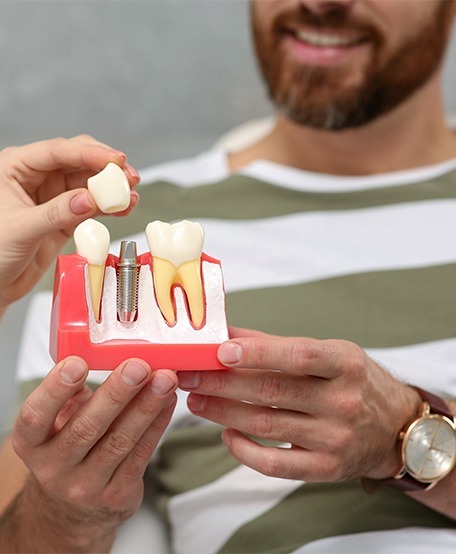
Tooth loss can have a significant impact on function and quality of life. When it comes to long-term options for replacing missing teeth, dental implants have become a widely used and well-researched solution. Understanding the types of dental implants available is essential in helping patients make informed decisions in consultation with their dental practitioner.
What Is a Dental Implant and How Does It Work?
A dental implant is a biocompatible post, typically made of titanium, that is surgically placed into the jawbone to act as a substitute for a missing tooth root. Over time, the implant fuses with the surrounding bone in a process known as osseointegration, creating a stable base for a restoration such as a crown, bridge, or denture.
Each implant is customised based on a person’s specific needs, with clinical attributes such as bone quality, gum health, and medical history taken into account.
What Are the Main Types of Dental Implants?
Dental implants can be classified based on their placement, structure, and intended use. Below is an overview of the most commonly used types:
Table 1: Overview of Dental Implant Types
| Type of Implant | Placement Area | Common Use Case | Notes |
| Endosteal Implant | Inside the jawbone | Single or multiple teeth replacement | Requires good bone support |
| Subperiosteal Implant | On top of jawbone | Alternative when bone volume is low | Less commonly used today |
| Zygomatic Implant | Cheekbone (zygoma) | Severe upper jaw bone loss | Advanced, specialised treatment |
| Mini Dental Implant | Narrow diameter | Denture stabilisation | Suited for limited bone structure |
What Implant-Based Tooth Replacement Options Are Available?
Implants are versatile and can support a range of dental restorations depending on the number of missing teeth and individual clinical conditions:
- Single Tooth Implant: Replaces a single missing tooth using one implant and a crown.
- Implant-Supported Bridge: Replaces several missing teeth using multiple implants and a fixed bridge.
- Full Arch Implants (e.g., All-on-4): Restores an entire arch of teeth using four or more implants.
- Implant-Retained Denture: A removable denture that is anchored securely by implants.
Table 2: Fixed vs Removable Implant Options
| Restoration Type | Description | Fixed or Removable | Suitable For |
| Single Crown on Implant | Replaces one tooth | Fixed | Localised tooth loss |
| Implant-Supported Bridge | Fixed bridge across two or more implants | Fixed | Multiple adjacent missing teeth |
| Full Arch Implant System | Full arch restoration supported by implants | Fixed | Full mouth rehabilitation |
| Implant-Retained Denture | Denture clipped onto implants | Removable | More stable than traditional |
What Factors Are Considered Before Implant Placement?
Dental Implant treatment is tailored to each individual based on a comprehensive clinical evaluation. Factors considered include:
- Bone density and volume
- Gum and periodontal health
- Smoking and medical history
- Jawbone development (particularly in younger adults)
- Oral hygiene practices
- Healing capacity
Table 3: Common Clinical Considerations
| Consideration | Why It Matters |
| Bone Quality and Volume | Determines implant stability and integration |
| Oral Hygiene | Essential for long-term success |
| Medical History | Impacts healing and surgical planning |
| Gum Condition | Healthy gums support better outcomes |
| Treatment Timeline | May span several months, including healing |
| Maintenance Requirements | Requires regular check-ups and home care |
What Materials Are Used in Dental Implants?
The majority of implants are made from medical-grade titanium due to its strength, biocompatibility, and ability to integrate with bone. In some cases, zirconia may be used for patients with specific material sensitivities. The materials used are selected based on individual factors and intended restoration.
What Is the Process of Receiving a Dental Implant?
The process typically involves the following stages:
- Initial Consultation: Includes diagnostic imaging and clinical assessment.
- Treatment Planning: Tailored plan considering bone structure and restoration type.
- Surgical Placement: Implant is placed into the bone under local or general anaesthesia.
- Healing Phase: Several weeks to months for osseointegration.
- Final Restoration: A crown, bridge, or denture is attached to the implant.
Each step is conducted under strict clinical protocols to ensure patient safety and optimal outcomes.
Why Is Professional Assessment Important?
Not every patient is a suitable candidate for every type of implant. An experienced dentist will assess:
- Whether bone grafting or sinus lifting is required
- The most suitable implant type
- Risk factors related to systemic health or oral conditions
- Maintenance protocols following treatment
Looking for Expert Guidance in Ferny Hills?
If you are exploring tooth replacement options and want to understand whether dental implants are right for you, the team at Ferny Hills Dental offers a professional and caring approach to oral health. With a strong focus on patient education, they provide tailored assessments and comprehensive explanations of all available options. Their clinicians follow a meticulous process that prioritises long-term function and oral wellness, ensuring that every treatment recommendation is made with your individual needs in mind. Whether you’re considering a single implant or full-arch restoration, Ferny Hills Dental provides clarity, support, and excellence at every stage of your care.
Important FAQs
- What is the most common type of dental implant?
The endosteal implant is the most widely used, placed directly into the jawbone and suitable for many patients with adequate bone structure. - Are dental implants suitable for everyone?
Not always. A dental professional will assess bone quality, oral hygiene, medical history, and other factors before recommending implant treatment. - What is the difference between fixed and removable implant restorations?
Fixed restorations such as crowns or bridgesremain in place, while removable options like implant-retained dentures can be taken out for cleaning. - How long does the dental implant process take?
It can take several months, depending on healing time, implant type, and individual factors like bone integration. - Are there risks involved with dental implants?
Like any surgical procedure, there are potential risks including infection, bone loss, or implant failure. These are minimised through proper planning and maintenance. - Do dental implants feel like natural teeth?
While they are designed to function similarly, implants do not have the same nerve sensations. However, they are often considered a highly functional and stableoption.
References
- Australian Dental Association: https://www.ada.org.au/
- Dental Board of Australia Guidelines: https://www.dentalboard.gov.au/Codes-Guidelines.aspx
- Better Health Channel (Victoria Health): https://www.betterhealth.vic.gov.au/health/conditionsandtreatments/dental-implant
Disclaimer
All dental procedures involve potential risks and benefits. The information provided in this blog is general in nature and should not be taken as medical advice. We recommend that you seek guidance from a suitably qualified health professional before making decisions about your oral health. Where appropriate, you may also wish to consider obtaining a second opinion.
Any images or videos featured are shared with the informed consent of our patients and are intended for educational purposes only. They are not a guarantee of results, as every patient is unique. Treatment outcomes — including recovery, potential complications, and effectiveness — can vary from person to person.


