

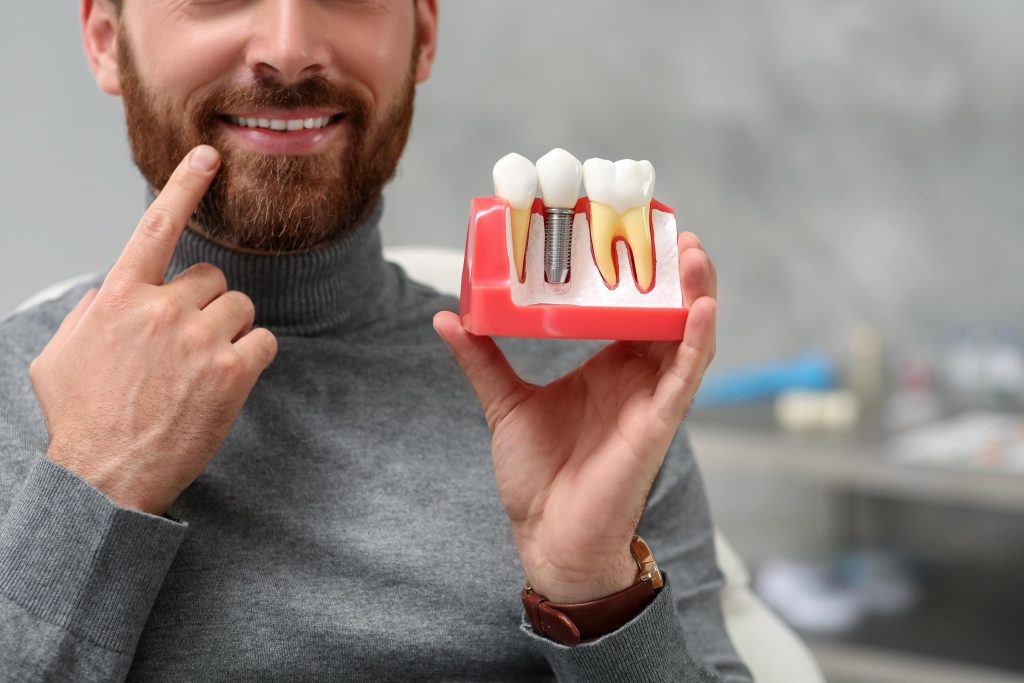
Screwless dental implants are implant-supported restorations that avoid the traditional retention screw. Instead of a screw channel through the crown, they use a friction-fit or press-fit mechanism—often called a conometric connection system—to secure a single-unit implant crown or short-span bridge to the abutment. In practical terms, they deliver the same stable, long-term function as conventional screw-retained options but with no visible screw hole, which supports improved aesthetics and a cleaner occlusal surface. In restorative implant dentistry, you’ll also hear terms like screwless implant restoration, cement-free dental implants, and friction-fit dental implants; all describe the broader concept of screwless retention.
From a treatment-planning perspective, screwless systems sit alongside other dental implant retention methods (screw-retained and cement-retained). Their distinguishing attributes include a minimally invasive connection method, precision-engineered stability, reduced risk of screw loosening, and simplified chairside handling, all underpinned by modern implant technology and digital workflows for accuracy.
How does the conometric or press-fit connection actually hold the crown?
A screwless system uses a tapered, precision-machined abutment and a matching, tapered female component within the crown or coping. When the crown is pressed onto the abutment with controlled force, the tiny taper angle generates friction and micromechanical interlock—the friction grip. This dental implant abutment connection is designed so that retention is strong enough for daily chewing forces yet allows a clinician to remove and reseat the crown with specific instruments if maintenance is needed.
Key points in the mechanism:
- Micro-taper engineering creates high friction and stable retention.
- No screw access means uninterrupted chewing surfaces and aesthetics.
- Cement-free options eliminate residual cement risks around the implant collar.
How is a screwless, friction-fit implant crown placed from start to finish?
Although individual systems vary, the clinical flow typically includes:
- Planning and placement – A titanium or zirconia implant fixture is placed into the jaw and allowed to integrate with bone.
- Digital capture – An intra-oral scan records implant position and soft-tissue contours for precise restorative design (digital dentistry and implant precision).
- Abutment selection – A dedicated, tapered abutment is chosen for the planned restoration.
- Laboratory fabrication – The implant-supported crown without screw is milled and lined with the matching conometric component.
- Press-fit seating – The crown is seated onto the abutment under controlled force to create a secure press-fit implant system.
- Verification and occlusion – The clinician checks contacts, bite, and aesthetics; the crown can be removed and reseated if fine-tuning is required.
Where might screwless dental implants be especially useful?
Screwless retention shines in scenarios where a screw access hole would compromise aesthetics or occlusion. It is widely used for:
- Anterior single-tooth crowns where appearance is paramount.
- Posterior units where a screw channel would land on a functional cusp.
- Short-span bridges where multiple screw channels would be visually or functionally disruptive.
- Implant-supported overdentures using conometric attachments (in selected designs).
How do screwless restorations compare with screw-retained implants?
The table below sets out the practical differences patients often care about.
Screwless vs screw-retained dental implants
| Feature | Screwless implants (friction-fit / conometric) | Screw-retained implants |
| Retention method | Friction-fit / conometric connection | Screw through abutment |
| Aesthetics | No visible screw access hole | May require a filling over the screw channel |
| Risk of screw loosening | None (no screw) | Possible over time |
| Maintenance | Remove/reseat with specific tools | Unscrew and retighten as required |
| Risk of cement issues | Low to none with cement-free protocols | Not applicable (no cement) |
| Occlusal surface integrity | Maintained (no access hole) | Potentially altered by access hole placement |
What components make up a screwless dental implant system?
Even without a screw, the foundational parts remain similar:
Components of a screwless dental implant system
| Component | Description |
| Implant fixture | Titanium or zirconia “root” placed in the jawbone |
| Abutment | Tapered, precision-engineered connector that fits the implant |
| Crown/prosthesis | Custom tooth that locks to the abutment via a conometric/friction interface |
| Retention mechanism | Conometric/press-fit design generating secure frictional retention |
Are screwless implants better for gum health and day-to-day care?
One driver behind cement-free dental implants is the desire to reduce cement-related peri-implant inflammation. In screwless systems that avoid permanent cement, there’s less chance of excess cement being left below the gumline—a known risk factor for tissue irritation. Day-to-day, patients brush and floss around a screwless implant crown much like a natural tooth. Professional maintenance remains essential; the easy removal and reseating of screwless crowns can streamline hygiene interventions, bite adjustments, or ceramic repairs without touching a screw.
Do screwless restorations feel different or affect bite forces?
In normal function, patients should not perceive a difference. Because the occlusal surface is uninterrupted by a screw access, clinicians can shape the crown contours for balanced contact and smooth chewing strokes. The precision-engineered taper provides stable retention under load, supporting long-term function. Material selection and occlusal design still matter, as with any implant restoration, to distribute forces and protect both the restoration and the supporting bone.
When might a clinician choose a different retention method?
Choice of retention—screw-retained vs. screwless vs. cement-retained implants—depends on access, angulation, soft-tissue architecture, the need for retrievability, and laboratory preferences. For example, if implant angulation demands a retrievable channel for complex maintenance, a screw-retained design may be selected. Conversely, where aesthetics, occlusal integrity, and reduced screw-related complications are priorities, a screwless implant restoration is compelling.
Why consider Ferny Hills Dental for screwless implant care?
If you’re exploring modern implant technology and want a result that looks and feels natural, Ferny Hills Dental provides a calm, detail-driven approach to restorative implant dentistry. Our dentist use digital dentistry to plan precisely, select the right dental implant retention methods for your situation, and craft a seamless result—often with the improved aesthetics of no screw access hole and a design that supports everyday cleaning. From the first consultation to ongoing maintenance, we focus on clarity, comfort, and transparent communication so you understand each step and enjoy a durable, confident smile.
Important FAQs
1) Are screwless dental implants as secure as screw-retained options?
Yes. The conometric connection system uses a precision taper that generates strong frictional retention. When properly planned and placed, screwless crowns are stable under normal chewing forces while remaining professionally retrievable for maintenance.
2) Will a screwless crown look more natural?
Often, yes. Because there is no visible screw hole, the occlusal surface and aesthetics can be optimised, particularly in front teeth where every detail matters.
3) Can a screwless implant crown be removed if something chips or needs adjusting?
It can. Clinicians use specific instruments to disengage the friction-fit dental implant crown, make the adjustment or repair, and then reseat it—usually without affecting the underlying implant.
4) Is cement ever used with screwless implants?
Many screwless workflows are cement-free, eliminating a potential source of peri-implant irritation. Your clinician will explain whether a fully cement-free protocol or a controlled, temporary seating step is appropriate for your case.
5) Who is a good candidate for a screwless implant restoration?
People who want excellent aesthetics, uninterrupted chewing surfaces, and simplified maintenance are strong candidates. Suitability depends on bone quality, implant position, bite, and soft-tissue contours—assessed during planning.
6) How do I look after a screwless implant day to day?
Brush and floss as you would natural teeth, and attend regular professional reviews. The design aims to support good hygiene access around the crown margins, and periodic checks help protect the implant and surrounding tissues over time.
References
- Healthdirect Australia. Dental implants. https://www.healthdirect.gov.au/dental-implants
- Better Health Channel (Victoria State Government). Dental implants. https://www.betterhealth.vic.gov.au/health/conditionsandtreatments/dental-implants
- Australian Dental Association (teeth.org.au). Dental implants. https://www.teeth.org.au/dental-implants


